Our region
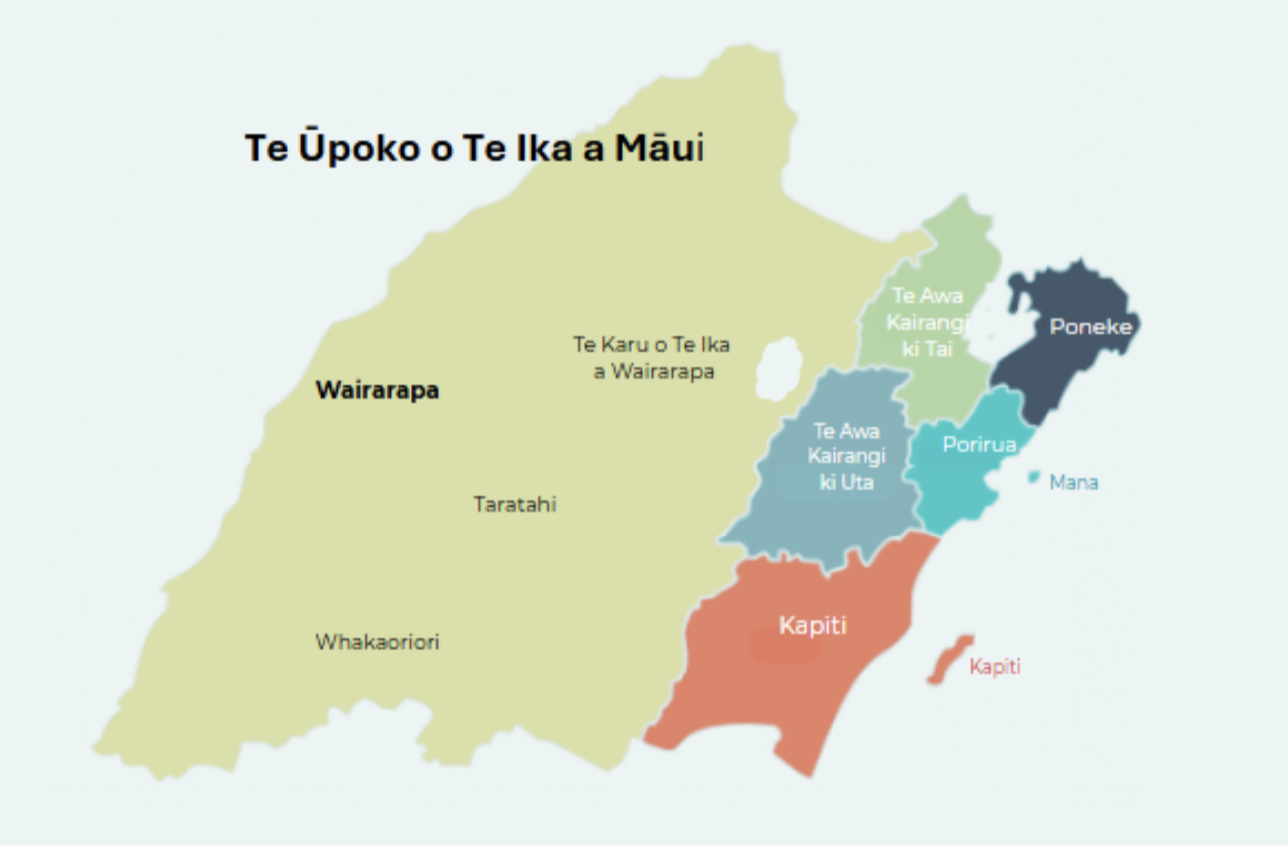
Te Ūpoko o Te Ika – the head of the fish – is the traditional Māori name for the Wellington region, drawn from the ancestral narrative of Māui, who fished up the North Island, Te Ika-a-Māui.
Te Ūpoko o te Ika
Māori have lived in the Wellington Region since the time of Māui, Kupe, and Whātonga – and about 60,000 live in the Region today – constituting 12 per cent of the Region’s population.
It is a place where whakapapa, whenua, and moana converge – rich in mātauranga and ancestral histories. As both a place of grounding and movement, Te Ūpoko o Te Ika is where the aspirations of whānau, hapū, and iwi continue to shape the future of cultural identity and the Māori economy.
Geographically the region stretches from the northern reaches of the Wairarapa near Mount Bruce and the Rangitīkei boundary, down through the Tararua and Remutaka ranges, encompassing the Kāpiti Coast, Porirua, Hutt Valley, Wellington City, and the southern Wairarapa. It is bound by the western coastline from Ōtaki to Te Whanganui-a-Tara (Wellington Harbour) and extends eastward across fertile plains to the Pacific coast near Matakitaki-a-Kupe (Cape Palliser).
Māori living in Te Ūpoko o te Ika
The Māori population is very young, with 58% under 30 (compared to 38% of non-Māori), and this proportion is expected to grow over the next 20 years. Wellington has many highly skilled jobs and a well-qualified population – 28% of non-Māori hold a Bachelor’s degree or higher, compared to 14% of Māori. While this is above the national Māori average, it’s mostly concentrated in Wellington City. The region’s young Māori population and lower qualification levels present both a challenge and an opportunity to boost education and participation in skilled employment.
28% of Māori in the region own their home compared to 57% of non-Māori
Just 10% of Māori in the region are self employed compared to 16.5% of non-Māori
Mean income for Māori was $24,100 compared to $32,000 for all residents in the region
We want to boost education and employment for Māori in our rohe
Check out our programmes


Mana Whenua and Mātāwaka Landscape
Te Ūpoko o Te Ika is home to six mana whenua groups, each with their own histories, aspirations, and progress in relation to Treaty of Waitangi settlements.
Settled with the Crown in 2014, Ngāti Toa Rangatira received redress for historical breaches, including cultural, financial, and commercial compensation. As of 2023, approximately 7,038 people affiliate with Ngāti Toa in the Wellington region. Their asset base has grown significantly—from $294 million in 2021 to an estimated $811 million in 2022—driven by strategic investments in property and infrastructure.
Te Āti Awa ki Whakarongotai settled their claims under the Te Āti Awa o Te Waka-a-Māui Deed of Settlement, receiving Crown acknowledgements and redress. In 2023, an estimated 1,614 individuals identified with the iwi, marking strong growth in recognition and registration. While no public figure is available for their standalone asset base, the iwi continues to develop its presence and influence in the region.
Representing descendants of Te Āti Awa and other Taranaki iwi in Wellington, Taranaki Whānui settled with the Crown in 2008. Their post-settlement governance entity, Port Nicholson Block Settlement Trust, has engaged in commercial and cultural development, although specific population estimates are not consolidated. The Trust’s investment activities are anchored in urban land holdings and commercial partnerships.
Ngāti Raukawa ki te Tonga has not yet settled its claims. The iwi is nearing the end of its Waitangi Tribunal hearings and is currently engaged in planning to establish a mandate to negotiate a settlement with the Crown. The broader Ngāti Raukawa collective includes around 31,029 affiliates (2023), with Ngāti Raukawa ki te Tonga forming a key constituent group. The iwi is preparing for the next phase of its Treaty journey, focused on enabling long- term economic and cultural revitalisation.
Rangitāne o Wairarapa settled with the Crown in 2016, receiving cultural, commercial, and financial redress. The iwi has around 3,000 registered members, with an expanding asset base that includes property and environmental interests. Their settlement has enabled the iwi to assert mana whakahaere across significant landscapes and engage proactively in regional development.
Ngāti Kahungunu Tamaki Nui-a-Rua settled their historical Treaty of Waitangi claims with the Crown on March 26, 2020, through a comprehensive settlement that included cultural, financial, and commercial redress. The iwi has an estimated population of approximately 12,000 members. The settlement facilitated the establishment of the Ngāti Kahungunu Tamaki Nui-a-Rua Settlement Trust to manage and administer the assets received.